
Roofs Built to Handle Standing Water
Flat Roof Installation & Repair in Hamilton for commercial buildings and low-slope residential structures where water pooling causes leaks
Montana Roof Man installs and repairs flat roofing systems across the Bitterroot Valley, addressing the unique drainage challenges that low-slope roofs face in this climate. You need a roofing system that channels water efficiently even when winter freeze-thaw cycles create ice dams or spring runoff overwhelms inadequate drainage. Flat roofs in Hamilton require specific membrane materials and slope design to prevent the ponding water that leads to premature membrane failure and interior leaks.
The service involves installing TPO, EPDM rubber, or modified bitumen roofing systems depending on the building's use, exposure conditions, and budget requirements. Each membrane type handles temperature extremes and UV exposure differently, with TPO offering heat-welded seams that resist Montana's wide temperature swings, EPDM providing flexibility in cold weather, and modified bitumen delivering multiple layers of protection for high-traffic roof areas. Drainage improvements often accompany installations, redirecting water away from vulnerable seams and preventing the pooling that accelerates deterioration.
Schedule a roof assessment to identify drainage concerns and determine which membrane system matches your building's conditions.
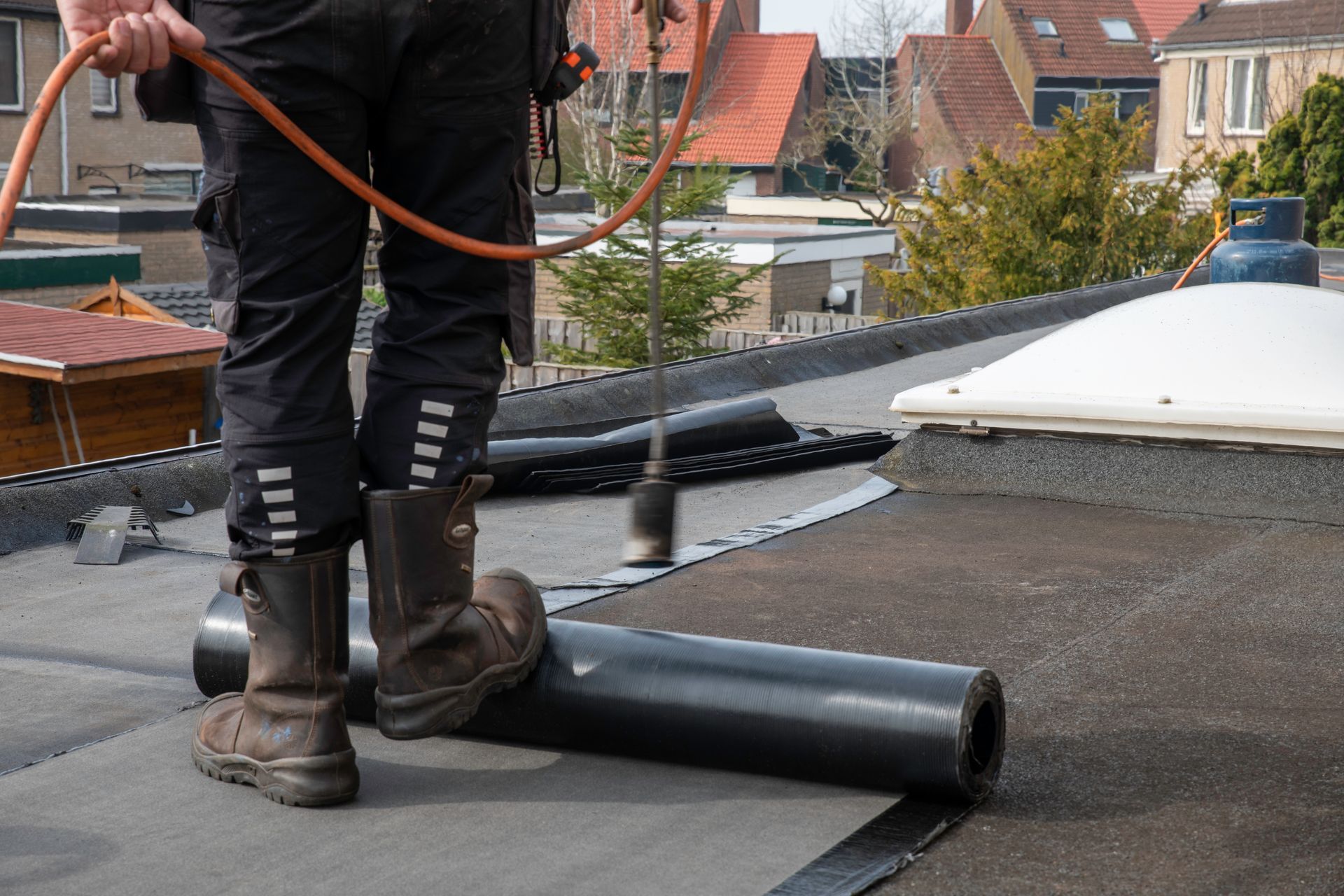
What Proper Flat Roof Installation Requires
Correct installation starts with evaluating the existing deck structure and identifying where water naturally collects during storms. The roof deck must provide adequate slope toward drains or scuppers, typically a minimum of one-quarter inch per foot, to move water off the surface before it penetrates seams or pooled areas degrade the membrane. Insulation layers are positioned and fastened to prevent wind uplift while maintaining thermal performance, and the membrane is then adhered or mechanically attached based on building height and wind exposure.
Once the system is installed, you'll see water moving directly to drainage points rather than sitting in low spots where it previously collected. Seams are fully sealed using heat welding for TPO, adhesive bonding for EPDM, or torch application for modified bitumen, creating watertight barriers that withstand Montana's temperature fluctuations without splitting or separating. The roof surface sheds debris more effectively, and interior ceiling stains from previous leaks stop spreading.
Flat roof repairs address specific leak points by cutting out damaged membrane sections, drying the underlying layers, and installing patch material that bonds to the existing system. Restoration options include applying protective coatings over aging membranes to extend service life without full replacement, particularly effective when the roof structure remains sound but the surface shows weathering or minor cracking.
What Building Owners Usually Ask
Understanding flat roof systems helps you make informed decisions about materials and maintenance requirements for your property.
What causes flat roofs to leak more than sloped roofs?
Flat roofs rely entirely on membrane integrity and drainage function rather than gravity to shed water, so any seam failure, puncture, or drainage blockage allows water to sit on the surface until it finds a path through the roofing layers, whereas sloped roofs naturally direct water away from vulnerable areas.
How does Hamilton's climate affect flat roof material selection?
Temperature swings between winter cold and summer heat cause roofing membranes to expand and contract repeatedly, making flexibility and seam strength critical factors, with EPDM rubber handling cold weather movement better while TPO resists UV degradation during high-altitude sun exposure common in the Bitterroot Valley.
What happens during a flat roof leak repair?
The damaged area is located using moisture detection if the leak source isn't visible, the membrane is cut back to dry material, any wet insulation beneath is removed and replaced, and a new membrane patch is bonded or welded over the repair area with edges extending well beyond the damage.
When should drainage improvements be added to an existing flat roof?
Drainage modifications make sense when water consistently pools in the same areas after storms, when you notice slower water clearance than when the roof was new, or when interior leaks occur in specific zones that correspond to visible ponding on the roof surface.
What determines whether a flat roof needs replacement or restoration?
Roof age, the extent of membrane damage, and the condition of underlying insulation and decking guide this decision, with restoration coatings working well for roofs showing surface wear but intact seams, while replacement becomes necessary when multiple leaks indicate widespread membrane failure or when the decking itself has deteriorated from prolonged moisture exposure.
Montana Roof Man evaluates your flat roof's current condition and drainage performance to recommend the membrane system and installation approach that addresses your building's specific water management challenges. Request an on-site evaluation to review material options and drainage solutions for your property.